IndiGo Baggage Mishandling Surge: Why Passengers Are Losing Bags While the System Looks Away
By idmahamad sekh
IndiGo Baggage Mishandling Surge: Why Passengers Are Losing Bags While the System Looks Away
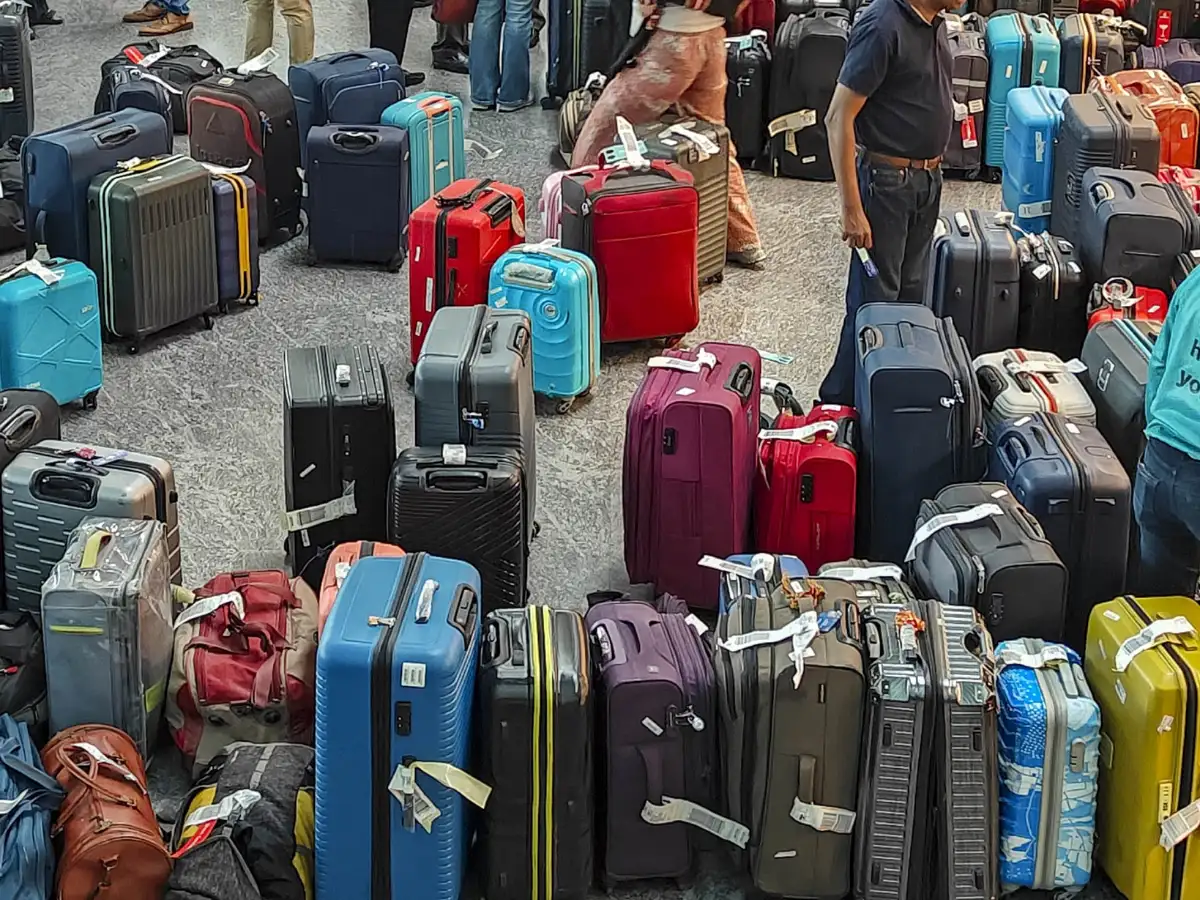
IndiGo baggage mishandling
Across major airports—Delhi, Mumbai, Bengaluru, Hyderabad, Kolkata—passengers are reporting a sharp rise in lost bags, delayed baggage, damaged suitcases, and missing items on IndiGo flights.
Although baggage issues exist across airlines, the volume of recent complaints shows that the IndiGo baggage mishandling problem is now widespread and structural.
Because IndiGo dominates India’s domestic travel market, any failure in baggage systems affects millions.
When a Missing Bag Becomes a Personal Crisis
In Hyderabad, a student returning from an exam trip waited two hours at the belt—only to learn her bag “did not arrive.”
Meanwhile in Delhi, a family traveling for a medical procedure discovered that their suitcase holding documents and medicines was missing.
In Mumbai, a software engineer found his laptop cracked inside a hard-shell suitcase, with no clear explanation.
These incidents reveal how baggage failures turn simple journeys into distress.
Because belongings carry emotional and financial value, losing them feels like losing stability.
IndiGo baggage mishandling exposes deeper operational weaknesses
1. Overloaded baggage systems at major airports
Passenger numbers are rising, but conveyor belts and sorting machines are not expanding as fast.
As a result, bags often spill, jam, or get diverted.
2. Understaffed ground handling teams
During peak hours, staff shortages delay unloading.
Therefore, bags arrive late or get mixed between flights.
3. Contracted agencies with limited accountability
Most baggage operations are outsourced.
Consequently, responsibility becomes unclear when something goes wrong.
4. Poor tagging and tracking practices
Reports show that tags sometimes fall off or get misread.
Hence luggage may arrive on the wrong carousel—or wrong city.
5. Insufficient CCTV monitoring around loading zones
When bags disappear or lose items, passengers rarely receive clear evidence of what happened.
6. Weak compensation processes
Passengers say claim handling is slow and confusing.
Therefore refunds or reimbursements take weeks.
These failures show that baggage handling is not just a back-end process—it is a core part of passenger dignity.
The Numbers That Reveal the Crisis
- Passenger luggage complaints on social platforms have increased sharply in the last quarter.
- Some airports report 15–25% higher baggage delay cases during peak months.
- IndiGo handles millions of bags weekly, making even small inefficiencies explode into large failures.
- Compensation claims often take 20–45 days to resolve.
Because India’s aviation demand is rising faster than infrastructure, baggage chaos is becoming more common.
Voices From the Ground
A young mother in Pune shared:
“My baby’s clothes and medicines were in that bag. They said to ‘file a report and wait.’”
A student in Bengaluru said:
“Everything for my college admission was in that suitcase. Now I’m stuck.”
A trader in Kolkata explained:
“My bag arrived torn. Items worth ₹12,000 were missing. No one took responsibility.”
These voices show how baggage failures hit hardest when people travel for critical reasons—exams, jobs, medical treatment, and migration.
Why This Matters
For many Indians, flying is not leisure.
It is necessity—often tied to urgent deadlines, limited savings, or once-in-a-year travel.
However, when an airline loses a bag, delays unloading, or damages belongings, the burden falls entirely on the passenger.
Because compensation is slow and rules are unclear, ordinary people feel helpless.
A dependable aviation system must protect not only the traveler—but the traveler’s belongings.
What IndiGo Must Fix Now
To rebuild trust, IndiGo needs structural reform:
- Strengthen baggage handling staff and training
- Introduce real-time baggage tracking inside the mobile app
- Improve coordination with ground handling contractors
- Add more CCTV coverage at loading and unloading points
- Publish transparent baggage handling performance reports
- Simplify and speed up compensation processes
- Assign dedicated helpdesks for baggage-related issues
When systems are designed well, bags travel safely—and passengers feel valued.
Conclusion
The IndiGo baggage mishandling surge highlights a deeper weakness in India’s aviation infrastructure.
Until IndiGo and airport authorities modernize their baggage systems, passengers will continue facing uncertainty, stress, and financial loss.
A strong airline protects every part of your journey—especially the parts you can’t keep in your hands.
What Comes Next
Next in this investigation: How groundwater collapse turned Indian cities into permanent water-scarcity zones.
Leave a Reply