IndiGo Staff Shortage Crisis: Why India’s Largest Airline Is Struggling to Run Its Own Operations
By idmahamad sekh
IndiGo Staff Shortage Crisis: Why India’s Largest Airline Is Struggling to Run Its Own Operations
IndiGo staff shortage
IndiGo dominates India’s aviation market. Yet the airline is now facing a growing internal breakdown: staff shortages across cabin crew, ground teams, security assistants, and customer support.
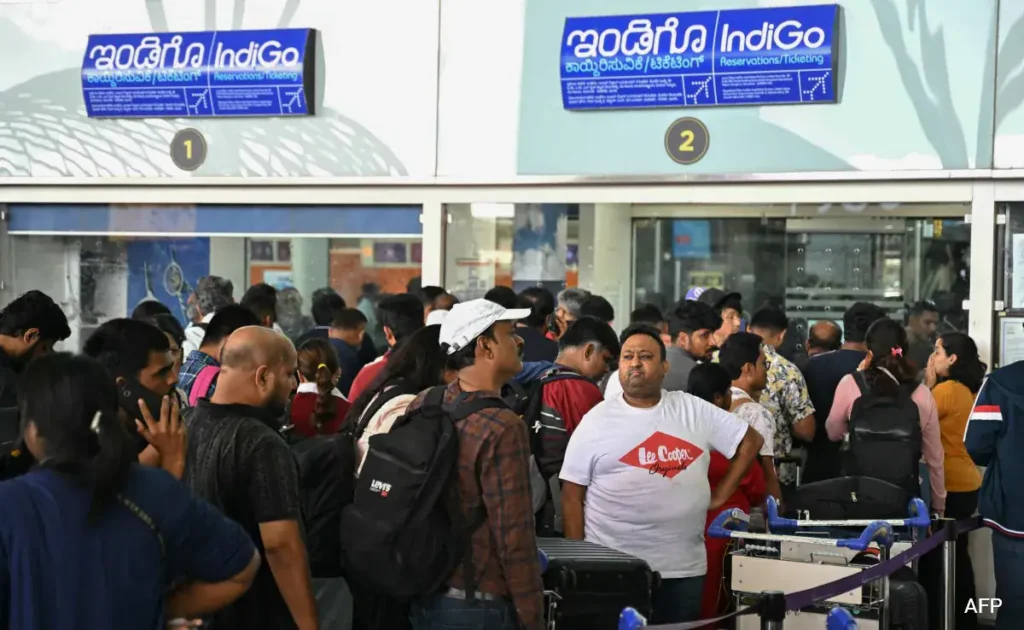
Because these shortages affect punctuality, safety checks, boarding efficiency, and baggage handling, the public is now experiencing repeated delays, long queues, and unpredictable service.
The IndiGo staff shortage is not a temporary problem.
Instead, it is a structural issue created by high workloads, rapid expansion, and slow hiring cycles.
When Workers Are Missing, Passengers Suffer First
In Delhi, a boarding gate remained closed for 40 minutes because no staff were present to begin the process.
Meanwhile in Chennai, passengers sat inside the aircraft without movement because the flight lacked a complete cabin crew.
In Bengaluru, check-in counters saw lines stretching across the terminal as only two staff members tried to handle hundreds of travelers.
Each incident shows how operational cracks quickly become public chaos.
Because air travel depends on human coordination, staff shortages instantly disrupt entire schedules.
IndiGo staff shortage reveals deeper structural problems
1. Rapid expansion without proportional hiring
IndiGo adds new flights aggressively.
However, recruitment often falls behind.
As a result, existing employees handle double workloads.
2. Rising burnout among crew and ground staff
High pressure and tight schedules create exhaustion.
Therefore absenteeism increases, worsening shortages.
3. Slow hiring and training pipeline
It takes time to train cabin crew and operational staff.
Consequently, IndiGo struggles to fill positions quickly during peak seasons.
4. High attrition rates
Many employees shift to competing airlines or hospitality jobs for better work-life balance.
Hence IndiGo loses trained workers faster than it replaces them.
5. Contractual roles with low wages
Ground staff often work under outsourced agencies with modest salaries.
Because of limited growth opportunities, turnover remains high.
6. Poor internal communication during crises
Teams at airports sometimes receive last-minute instructions.
Therefore operations slow down further.
These patterns show that IndiGo’s staffing issues are embedded in the airline’s growth model—not just day-to-day mismanagement.
The Numbers Behind the Shortage
- IndiGo employs over 30,000 workers, but industry demand has grown even faster.
- India requires thousands of new aviation workers every year as passenger numbers surge.
- Crew rostering software has faced repeated pressure due to unpredictable schedules.
- Passenger complaints about staff unavailability have increased sharply during peak travel months.
Because IndiGo handles most domestic travelers, even a 5% staffing gap leads to system-wide ripple effects.
Voices From the Ground
A cabin crew member (name withheld) said:
“We finish one flight and run to the next. There is no breathing time.”
A ground staff worker in Mumbai shared:
“I handle three counters alone. Passengers get angry, but we are exhausted.”
A passenger in Hyderabad explained:
“The airline blamed ‘operational reasons.’ But staff openly said they were short-handed.”
These voices reveal a troubling reality:
workers are stretched, passengers are frustrated, and systems are failing.
Why This Matters
Airline stability depends on its workforce.
When staff are overworked, underpaid, or unavailable, safety, punctuality, and service quality all decline.
Moreover, low-income travelers who rely on predictable schedules—students, migrant workers, medical travelers—face the harshest consequences when staff shortages cause delays or missed connections.
Reliable aviation requires reliable staffing.
What IndiGo Must Fix Now
To restore confidence and reduce public suffering, IndiGo needs urgent reforms:
- Hire more crew, ground staff, and support teams
- Improve wages and working conditions for outsourced staff
- Create realistic shift lengths to reduce burnout
- Increase reserve staff pools for peak hours
- Upgrade crew rostering systems with predictive planning
- Strengthen communication across airport teams
- Publish transparent operations data for public accountability
A stronger workforce means a stronger airline.
Conclusion
The IndiGo staff shortage is a warning sign.
Unless India’s largest airline invests in its workers and modernizes its operations, passengers will continue facing delays, stress, and uncertainty.
A national carrier cannot run on understaffed hope—it must run on skilled, supported, and respected workers.
Aviation grows on wings—but it survives on people.
What Comes Next
Next in this investigation: IndiGo Refund Delay Crisis: Why Passengers Wait Weeks for Money They Should Receive Immediately
Leave a Reply