IndiGo Check-In Meltdown: Why Passengers Are Facing Long Queues, Frozen Apps, and Missed Flights
By idmahamad sekh
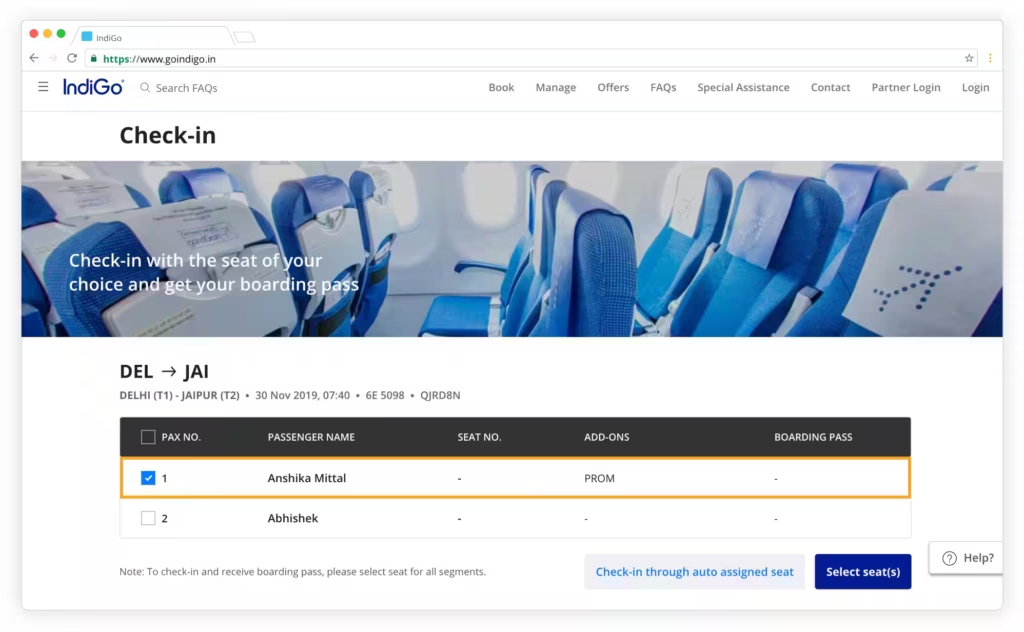
IndiGo Check-In Meltdown: Why Passengers Are Facing Long Queues, Frozen Apps, and Missed Flights
IndiGo check-in problems
Across India’s busiest airports—Delhi, Mumbai, Bengaluru, Hyderabad, and Kolkata—passengers are reporting massive check-in delays, malfunctioning kiosks, app failures, and serpentine lines stretching across terminals.
Although travel demand keeps rising, the IndiGo check-in problems show that the airline’s digital and on-ground systems are not keeping pace.
Because IndiGo carries the majority of India’s domestic flyers, any failure instantly becomes a national-scale inconvenience.
When the Check-In Line Becomes a Crisis
In Delhi, passengers waited more than 60 minutes just to drop bags.
Meanwhile in Bengaluru, IndiGo’s web check-in temporarily crashed during peak hours, forcing thousands to queue at physical counters.
In Hyderabad, a family missed their flight despite reaching the airport two hours early because no counters were available for assistance.
These situations reveal a cascading truth:
When check-in fails, the entire journey collapses—boarding, baggage, and connections.
H2: IndiGo check-in problems expose deep operational flaws
1. Understaffed counters during high traffic
Airports experience rising footfall after major festivals and exam seasons.
However, IndiGo counters remain short on staff.
As a result, each queue moves painfully slowly.
2. Over-loaded digital systems
The IndiGo app and website face heavy pressure during peak hours.
Therefore check-in attempts fail, freeze, or loop endlessly.
3. Kiosk machines with poor maintenance
Many kiosks remain broken or unresponsive.
Consequently, passengers have fewer self-service options.
4. Insufficient counter allocation at airports
Even during known high-demand periods, IndiGo sometimes opens fewer counters than required.
Hence, long queues form immediately.
5. Mandatory seat-selection prompts slowing check-in
Even when passengers want free seats, repeated pop-ups push paid options.
Because this consumes extra time, lines grow longer.
6. Lack of real-time passenger communication
Passengers rarely receive alerts about delays at check-in counters.
Therefore they panic and rush, creating crowding at terminals.
These weaknesses show why a simple process has turned into one of the most stressful parts of flying.
The Numbers Behind the Meltdown
- IndiGo handles 2,00,000+ passengers every day.
- Peak-hour check-in queues at some airports now run 30–80 minutes.
- App crashes during peak travel days have been widely reported.
- India’s aviation traffic increased nearly 20% year-on-year, but check-in infrastructure has not expanded equally.
Because IndiGo manages the largest share of this demand, cracks appear faster and sharper.
Voices From the Ground
A student in Mumbai said:
“My check-in failed five times. The queue took so long that my flight left.”
A mother in Chennai shared:
“The app froze again and again. We finally checked in at the airport after waiting forever.”
A software engineer in Delhi explained:
“The kiosks were dead. Counters were understaffed. Everyone was panicking.”
These voices highlight how stress multiplies when systems designed for convenience fail without warning.
Why This Matters
Check-in is the first step in air travel.
When it malfunctions, travelers lose confidence, miss flights, and face expensive rebooking costs.
Moreover, delays hurt low-income passengers the most—those who cannot afford last-minute changes or meals during extended wait times.
A modern aviation system must guarantee smooth, predictable check-ins.
What IndiGo Must Fix Now
To restore passenger trust and prevent mass disruption, IndiGo needs urgent reforms:
- Increase counter staffing during peak periods
- Upgrade digital infrastructure to handle higher traffic
- Repair or replace faulty kiosks across airports
- Display real-time queue times inside the app
- Simplify web check-in by removing unnecessary prompts
- Strengthen coordination between airport and airline teams
- Add dedicated helpdesks for check-in failures
These changes can transform check-in from a chaos point into a seamless experience.
Conclusion
The IndiGo check-in problems demonstrate how fragile India’s aviation operations have become.
Until IndiGo invests in stronger systems, clearer communication, and adequate staffing, passengers will continue facing unpredictable lines, missed flights, and unnecessary stress.
A nation that flies forward deserves check-in systems that don’t hold it back.
Leave a Reply