Water Crisis in India: Why the Emergency Is Structural, Not Seasonal (2026)
By idmahamad sekh
Updated: January 2026
Water Crisis in India is not running out of rain.
It is running out of safe, usable water.
That difference explains why the water crisis in India persists even after “normal” monsoons. Scarcity today is not only about how much water exists, but how polluted it is, who controls it, and how poorly it is governed.
This is not a seasonal failure.
It is a structural breakdown — of quantity, quality, law, and coordination.
THE STRUCTURAL REALITY
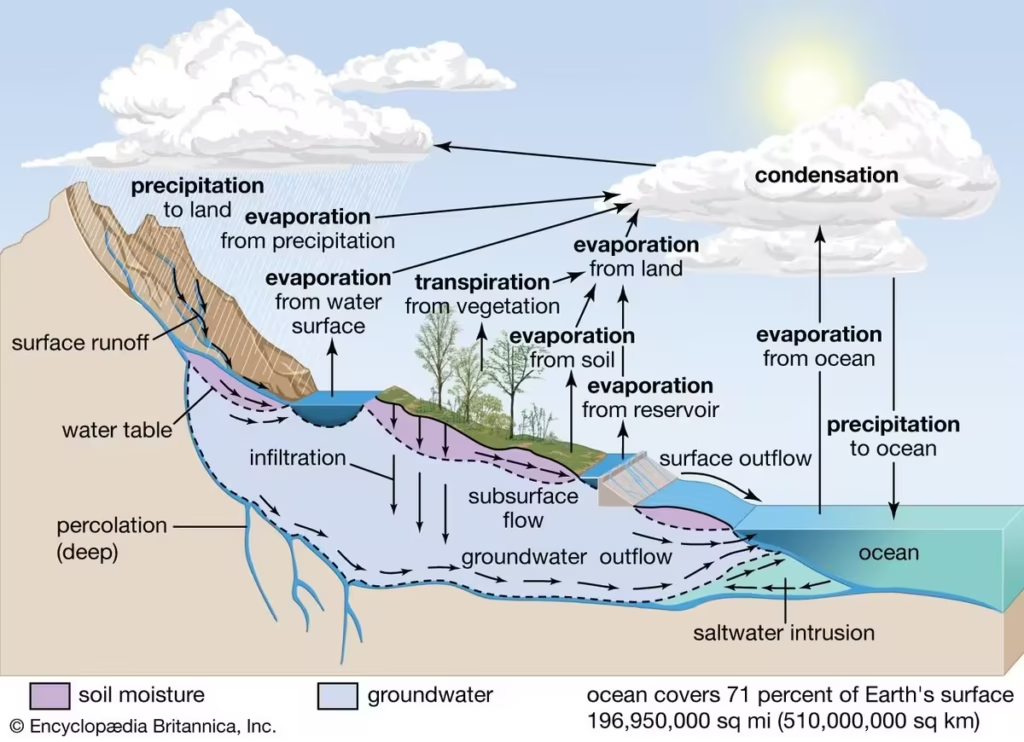
What this shows:
High-rainfall regions like the Indo-Gangetic Plain collapse due to over-extraction, while Peninsular India faces irreversible depletion in hard-rock aquifers. One country. Two geologies. One broken system.
Key Takeaways
- India’s water crisis is structural, driven by governance, law, and pollution — not rainfall alone.
- Groundwater collapse, toxic surface water, and leaking infrastructure shrink usable supply.
- Federal fragmentation means no single authority is fully accountable.
India’s Water Crisis by the Numbers (2026)
| Metric | Current Status (2026) | The Structural Goal |
|---|---|---|
| Agricultural Water Use | 80–90% of freshwater | <70% via efficiency & crop shift |
| Urban Leakage (NRW) | 38% national avg; Delhi ~58% | <15% (global benchmark) |
| Rural Tap Access | 81% households covered | 100% with sustainable sources |
| Surface Water Quality | ~70% contaminated | Fit-for-use standards |
| Legal Framework | Linked to land (1882 Act) | Common pool resource |
The 2026 Reality Check (Quick Facts Sidebar)
The 2026 Reality Check
- Per-capita water availability has fallen below 1,400 m³/year, officially water-stressed.
- Over 21% of communicable diseases are linked to unsafe water.
- The NITI Aayog warns water stress could cut up to 6% of India’s GDP by 2050.
What are the main causes of the water crisis in India?
The water crisis in India is driven by six structural failures:
- Groundwater depletion from unregulated borewells
- Severe water pollution, reducing usable supply
- Agricultural inefficiency, consuming most freshwater
- Urban leakage, where treated water never reaches users
- Legal loopholes, especially the 1882 groundwater law
- Federal fragmentation, with divided authority
Climate change magnifies these failures.
It did not create them.
The Rainfall–Scarcity Paradox
India increasingly receives rain in short, violent bursts. Floods replace recharge. Rivers overflow briefly, then dry.
Rainfall no longer equals security because storage, recharge, and governance systems are broken. Scarcity is produced between cloud and cup.
The Second Scarcity: India’s Water Quality Crisis
India does not just lack water.
It lacks safe water.
- Nearly 70% of surface water is contaminated.
- India ranks 120th out of 122 globally on water quality.
- Millions rely on water that carries disease, not relief.
Treating quantity without addressing toxicity is like delivering poison through better pipes.
Groundwater Depletion in India: Spending What Cannot Be Replaced
Groundwater is India’s real water bank — and it is being emptied without limits.
Once an aquifer collapses, recovery is often geologically impossible within a human lifetime, especially in hard-rock regions.
The NITI Aayog Composite Water Management Index warned that 21 major cities, including Delhi, Bengaluru, and Chennai, face severe groundwater stress affecting nearly 100 million people.
Regional Groundwater Reality
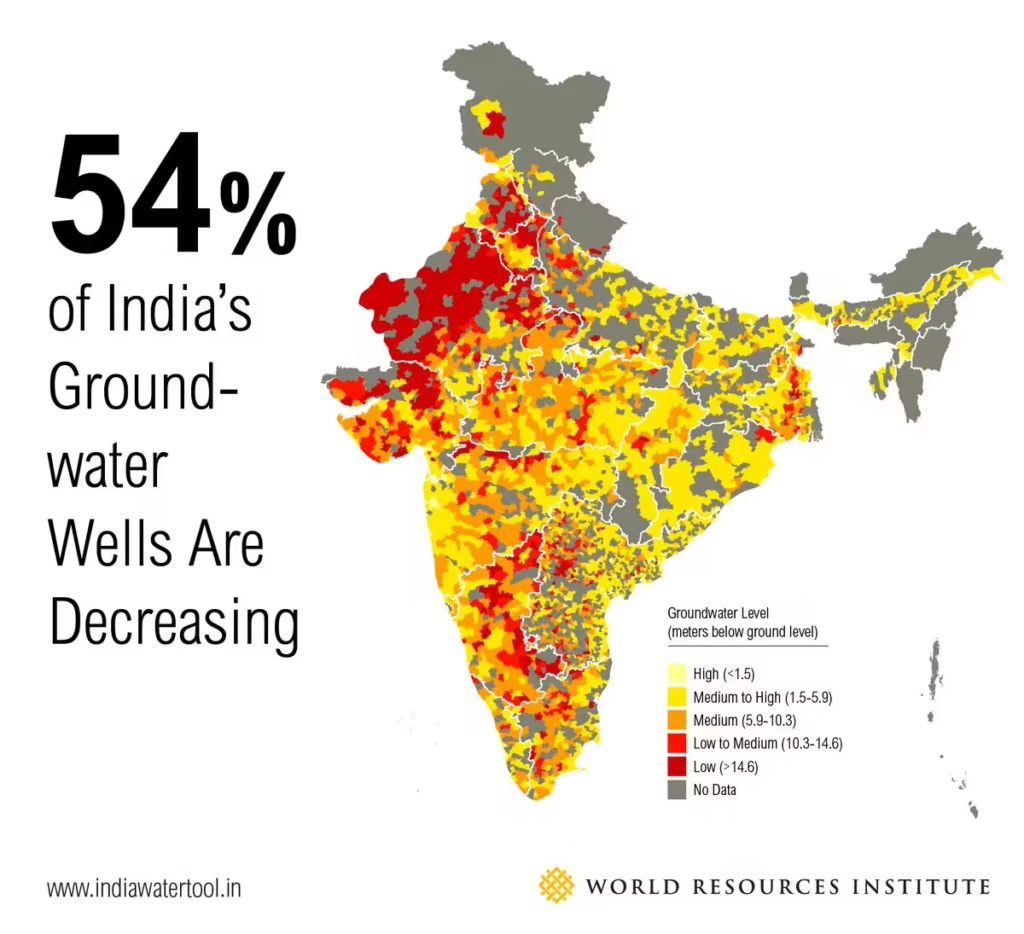
Different geology. Same policy failure.
Agriculture, Virtual Water & the Hidden Export
Agriculture consumes 80–90% of India’s freshwater.
When India exports rice or sugar, it exports virtual water — billions of litres of groundwater embedded in crops grown in water-stressed regions.
This is not farmer behaviour.
It is a policy signal problem.
Urban Water Stress: When “Clean” Isn’t Safe
The Indore Case (January 2026)
In January 2026, Indore — repeatedly ranked India’s cleanest city — suffered a water contamination tragedy.
A sewage–potable pipeline breach in Bhagirathpura caused 1,400+ illnesses and multiple deaths.
Infrastructure existed.
Maintenance failed.
Clean cities are not safe cities. They are fragile systems.
The Leaks No One Talks About
Indian cities lose 38% of treated water as Non-Revenue Water (NRW).
Delhi loses nearly 58%.
Scarcity begins long before water reaches a home.
Governance Gaps, Law & Federal Friction
The Easement Act of 1882
This colonial law links groundwater rights to land ownership. Own land? Pump freely.
It makes collective regulation legally difficult, even during collapse.
Federal Friction: When Water Crosses Borders
Water is a State subject under India’s Constitution.
Interstate disputes — such as Cauvery River and Yamuna River sharing conflicts — show how political boundaries stall reform.
India lacks a harmonised national–state water framework that aligns basin-level science with federal governance.
The Economic Cost & Energy–Water Nexus
Water scarcity is also a fiscal crisis.
- Falling water tables mean rising electricity demand for pumping.
- Power subsidies hide the real cost, straining state finances.
- The NITI Aayog projects up to 6% GDP loss by 2050.
The current model is unsustainable.
Government Initiatives: Jal Jeevan Mission (2026 Reality)
The Jal Jeevan Mission expanded access rapidly.
As of January 2026, 81% of rural households have tap connections.
But the Mission was extended to 2028 because pipes do not create water.
Pipes vs Source
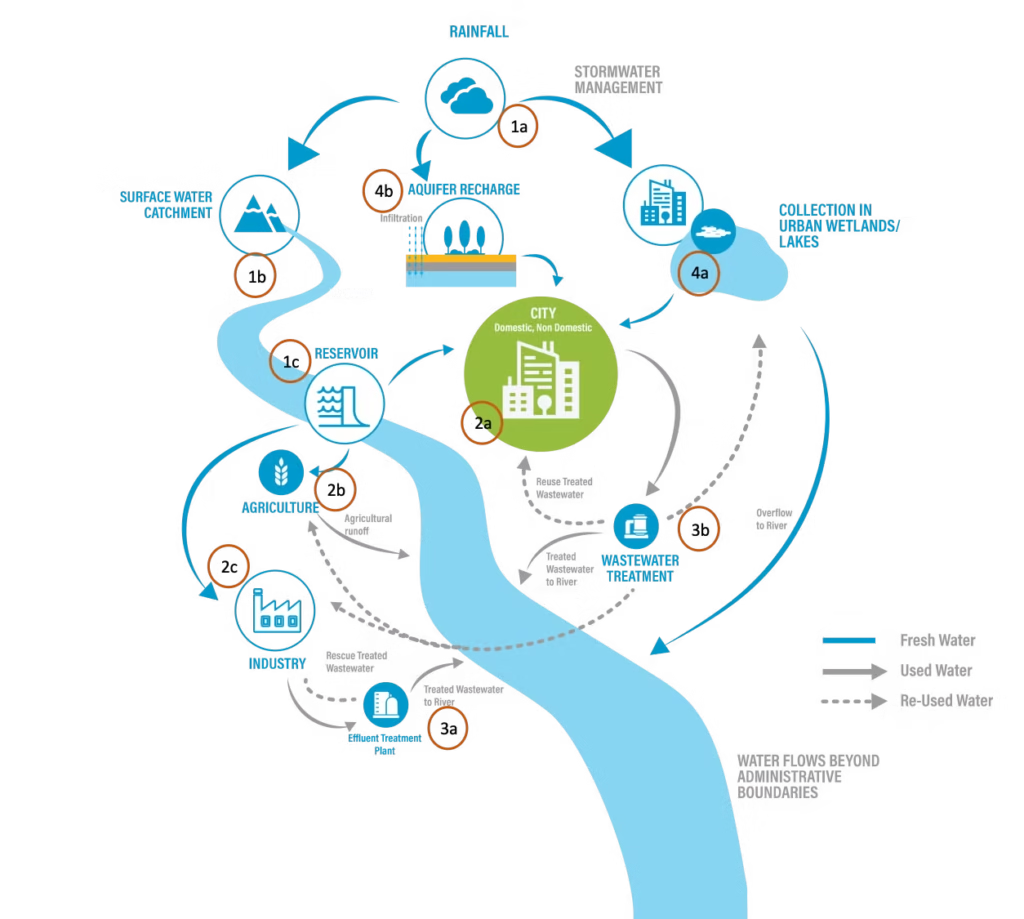
Infrastructure without sources is just plumbing.
Climate Change: The Accelerant
Climate change compresses rainfall into fewer, more intense events. Recharge drops. Runoff rises.
Climate Resilience Strategies
- Traditional systems: Baolis, johads, stepwells revived for recharge
- Predictive AI: Satellite-based crop-water budgeting
- Sponge cities: Wetlands, floodplains, permeable streets
A Path Forward: Blue-Green & Circular Systems
- Demand-side management in agriculture
- Blue-green urban infrastructure
- Greywater recycling
- Integrated Water Resource Management (IWRM)
- Legal reform treating water as a common pool resource
Circular Water Economy & ZLD
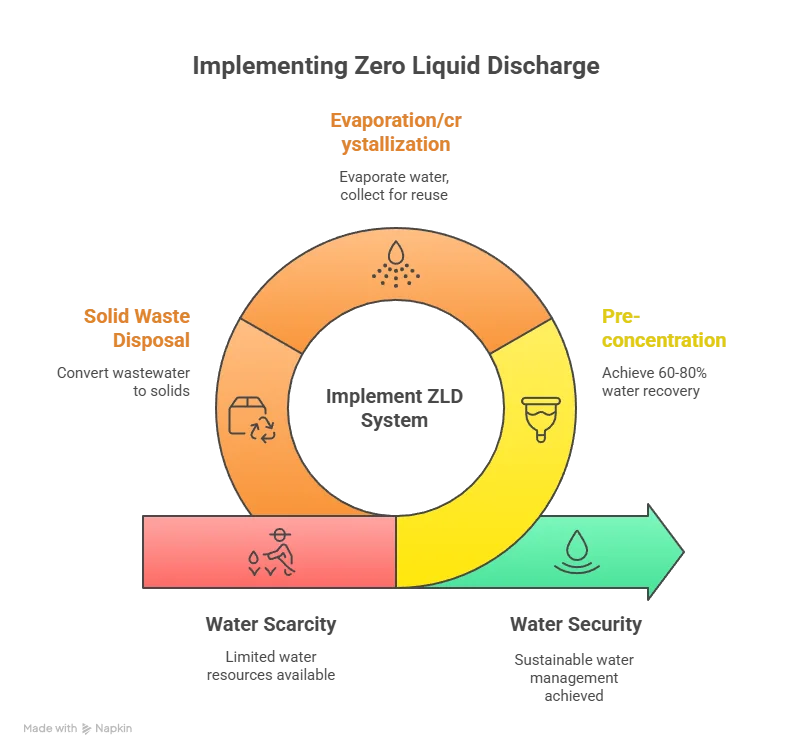
The Human Face of Reform (What Works)
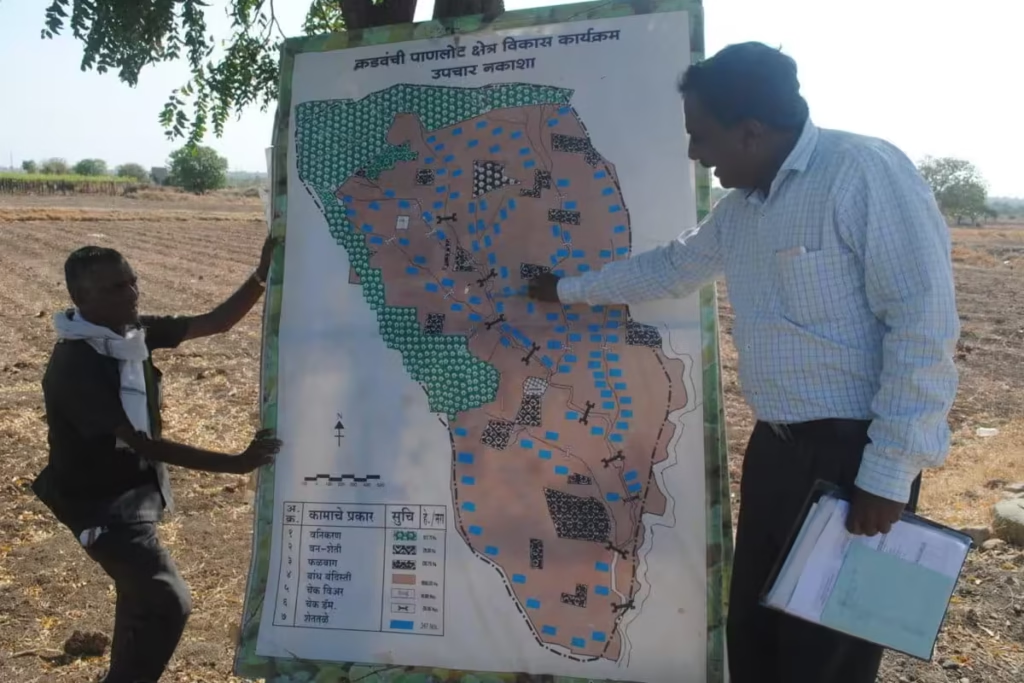
In parts of Marathwada, community-led watershed revival restored wells.
In Bengaluru, apartment clusters cut tanker use through rainwater harvesting.
Systems fail. Communities adapt.
Citizen’s Action: What Individuals Can Do
Citizen’s Action Box
- Join local groundwater mapping & recharge efforts
- Support rainwater harvesting in housing societies
- Reduce demand for water-intensive foods (sugar, polished rice)
- Demand transparency from local utilities
Structural change starts locally.
Day Zero in India: A City-by-City Reality
- Bengaluru: Seasonal Day Zero — 50% borewell dependence
- Chennai: Systemic survivor — reliant on desalination
Day Zero is not a date.
It is a condition spreading unevenly.
Frequently Asked Questions
Is India running out of water?
No. India is running out of safe, governable water by over-extracting groundwater and polluting surface sources faster than either can recover.
Why doesn’t infrastructure alone fix this?
Because pipes don’t create water. Governance does.
About the Author
Idmahamad Sekh is an environmental policy researcher focusing on Indian hydrology, water governance, and infrastructure risk.
This analysis draws on 2025 field observations, the National Water Audit, and official data from NITI Aayog and the Ministry of Jal Shakti.
Final Word
India’s water crisis is not just about scarcity.
It is about law, pollution, federal friction, and human choices.
Until those systems change, no monsoon will be enough.
Continue to:
Why Indian Cities Are Running Out of Water Explained for India and the World
Leave a Reply