Are Kolkata’s New Towers Built for the Next Tremor?
By idmahamad sekh
By Investigative Desk
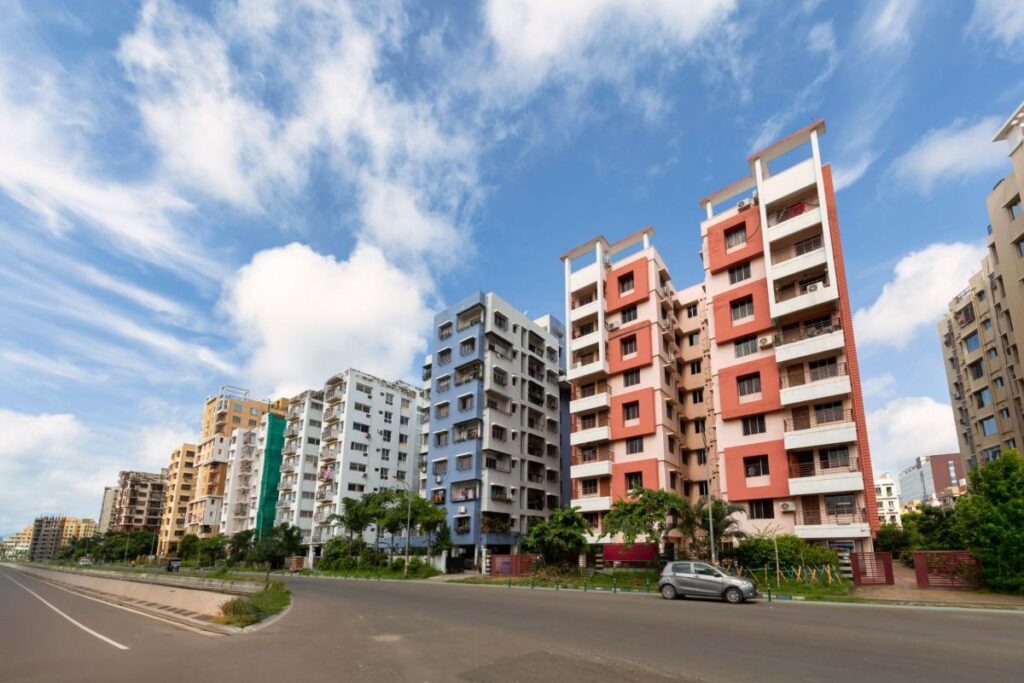
The recent sequence of 6.0 and 5.5 magnitude regional tremors served as a visceral wake-up call for Kolkata. While standard evacuation protocols were triggered across the city’s commercial and residential hubs, the subsequent return to normalcy masks a deeper, more permanent engineering vulnerability.
The core threat to Kolkata is not merely its proximity to tectonic fault lines, but the documented opacity within the municipal enforcement of building codes. A forensic look at current structural oversight reveals significant transparency gaps that leave residents in newly developed, high-density zones without verifiable proof of structural integrity.
1. The Geological Reality: Amplification on the Bengal Basin
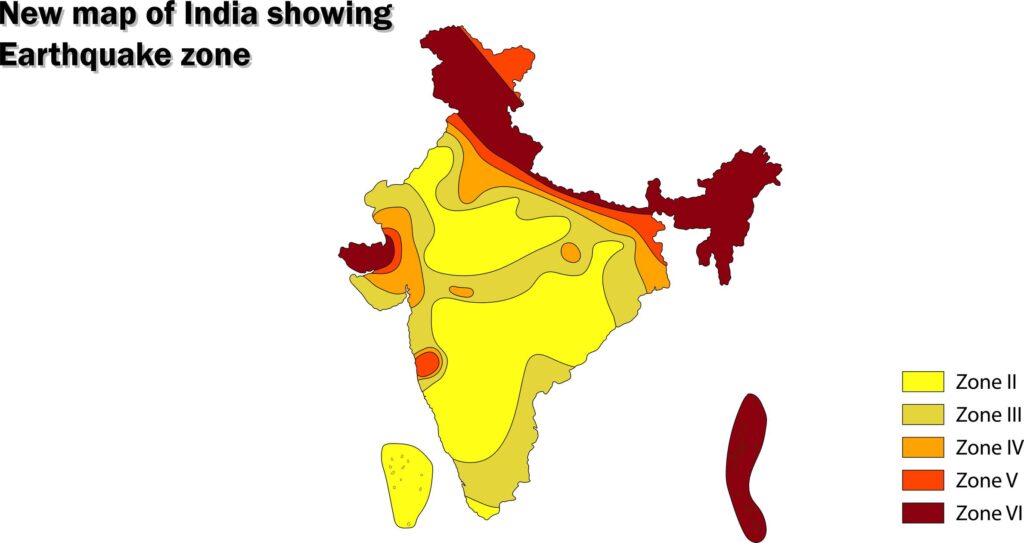
Kolkata is situated on the Bengal Basin, characterized by Holocene alluvial deposits that reach depths of 40 to 80 meters before hitting denser strata. This geology creates a unique “basin effect.” When seismic waves travel from distant tectonic events, this soft river sediment does not absorb the shock; it acts as an amplifier.
Historical data confirms this risk. During the 1934 Bihar-Nepal earthquake, long-period seismic waves traveled over 650 kilometers through this exact sediment, amplifying enough to collapse the tower of St. Paul’s Cathedral. Modern vertical expansion, particularly in the city’s peripheral wetlands, has significantly increased the “at-risk” population density exposed to this baseline geological hazard.
2. Soil Liquefaction in Rajarhat and New Town
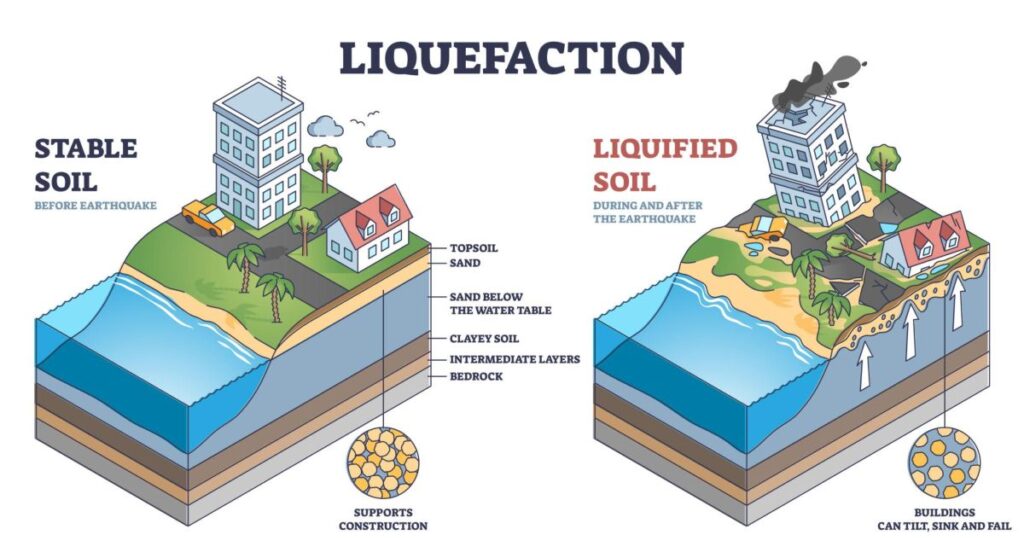
The primary hazard for Kolkata’s modern high-rises—particularly in reclaimed zones like Rajarhat and New Town—is soil liquefaction and ground motion amplification. Independent site response studies indicate that the amplification factor for Peak Ground Acceleration (PGA) in parts of the Kolkata Metropolitan Area ranges from 1.2 to as high as $4.82$ in soft, dark grey silty clay layers.
This geology creates two quantifiable hazards:
- Shear Force Multiplier: High-rise structures built on soil with an amplification factor of 4.0+ experience a massive increase in horizontal shear force during prolonged tremors compared to those on stable ground.
- Liquefaction Settlement: Unanchored friction piles in these soft sediment zones risk severe differential settlement during a sustained tremor, potentially resulting in a permanent structural tilt or “pisa effect.”
3. IS 1893: The Retroactive Regulatory Gap
The Bureau of Indian Standards recently upgraded the national earthquake-resistant design code from IS 1893:2016 to IS 1893:2025. This revision shifts to a Probabilistic Seismic Hazard Assessment (PSHA), placing heavier emphasis on site-specific soil characteristics.
However, a critical regulatory distinction undermines these safety gains. Indian building codes are adopted into law through municipal bylaws, which are typically applied prospectively.
The Vulnerability Paradox: While the National Disaster Management Authority (NDMA) issues guidelines for the seismic evaluation of older buildings, the Kolkata Municipal Corporation (KMC) has yet to legally mandate these as retroactive local bylaws. Consequently, retrofitting remains entirely voluntary for private developers and housing societies, leaving thousands of pre-2016 high-rises technically “obsolete” by modern safety standards.
4. The Oversight Deficit: Inspector Capacity vs. Project Load
A building code is only as effective as the municipal body enforcing it. Since the implementation of West Bengal’s online building plan approval system (e-Grihanaksha), the state has processed over 103,000 sanctions, with thousands of active projects falling directly under KMC jurisdiction.
The central concern lies in the Inspector-to-Permit Ratio. Currently, the exact headcount of KMC-employed structural engineers tasked with verifying these thousands of active permits remains officially undisclosed. Without a confirmed ratio, it is impossible to verify whether municipal inspections are rigorous, physical structural audits, or merely “document-only” approvals reliant on the self-certification of third-party developer engineers.
5. Delayed Collapse: Post-Tremor Structural Fatigue
Standard post-earthquake response in Kolkata rarely extends beyond the “all-clear” signal. However, engineering forensics suggest that buildings do not always collapse during the primary tremor.
Prolonged shaking causes cumulative micro-fracturing in load-bearing columns. This non-structural damage weakens the overall “ductility” of the edifice. Without a mandated, technical post-tremor audit (Rapid Visual Screening or RVS), buildings are left vulnerable to delayed failure during secondary aftershocks or future minor tremors.
6. Legal Accountability: The NGT and High Court Record
If a regulatory system lacks punitive measures, compliance becomes functionally optional. A review of recent legal dockets suggests a “litigation vacuum” regarding seismic safety.
While the National Green Tribunal (NGT) has been active in environmental violations on wetlands, there is no public record of a major developer in Kolkata facing prosecution, revocation of occupancy certificates, or blacklisting specifically for seismic non-compliance or soil report misrepresentation in the past decade. The absence of such cases raises substantive questions: Is compliance perfect, or is the oversight mechanism failing to identify violations?
The Transparency Deficit: A Summary of Hidden Metrics
The current state of seismic readiness cannot be assessed without raw data. The table below outlines the critical enforcement metrics that currently remain outside the public domain:
| Metric | Status | Publication Obligation | Public Access Path |
|---|---|---|---|
| High-rise Peer Review Logs | Unknown | None | RTI Required |
| KMC Structural Engineer Count | Undisclosed | Internal Data | RTI Required |
| Mandatory Post-Tremor Audits | Not Required | N/A | Legislative Change Needed |
| Post-2016 Retrofitting Notices | Unknown | Low | Municipal Records |
| Seismic-Related Blacklisting | Zero (Reported) | Partial | Court Records/NGT Dockets |
Conclusion: A Roadmap to Resilience
Kolkata stands at a crossroads. To move from a culture of “reactive evacuation” to “proactive resilience,” three immediate steps are required:
- Mandatory Disclosure: KMC must publish the seismic certification and soil test reports for all high-rises on a public-facing portal.
- Retroactive Bylaws: Adoption of IS 1893:2025 as a mandatory standard for structural health audits of buildings older than 15 years.
- Third-Party Audits: Moving away from developer self-certification to an independent, KMC-empaneled panel of structural auditors.
Public safety is built on a foundation of data. Until the “transparency gap” is closed, the true integrity of Kolkata’s skyline remains an uncalculated risk.
If you felt the ground shake in Kolkata on the evening of February 3, 2026, you weren’t alone. Thousands across West Bengal and Bangladesh experienced noticeable tremors. While earthquakes can be frightening, understanding the science behind them can help replace panic with prepared awareness.
Leave a Reply