
West Bengal Election 2026: The Voter List War and the Battle Beyond Ballots
January 2026 has fundamentally altered Bengal’s election narrative.
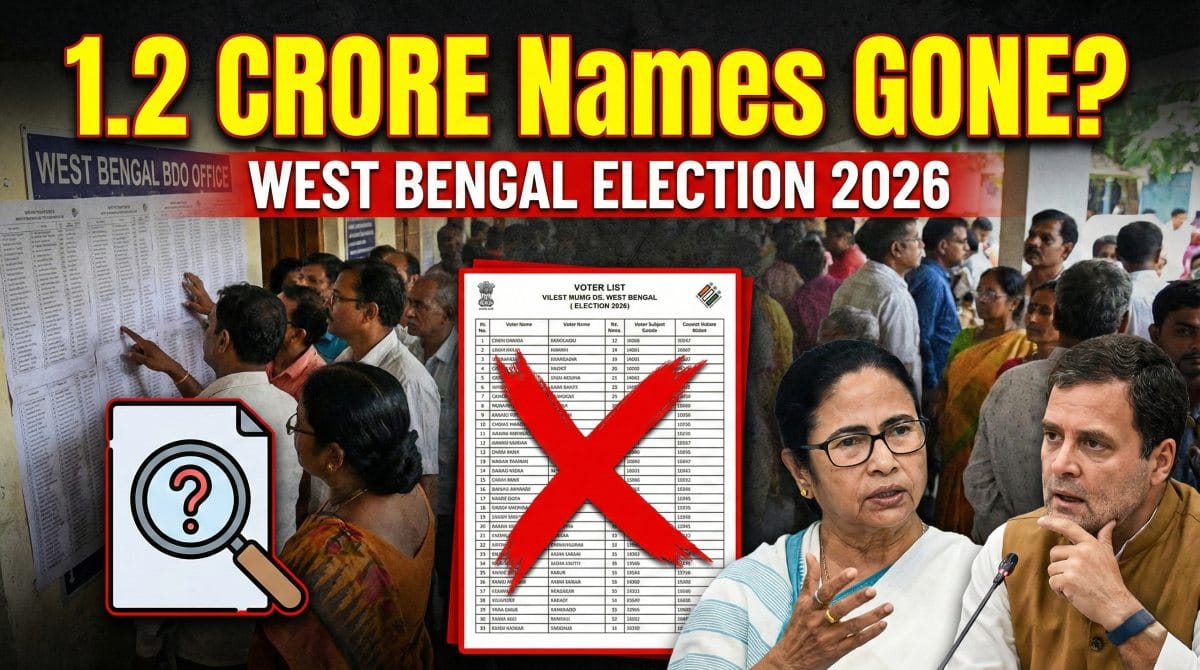
The political contest has moved away from stages and slogans into BDO offices, verification camps, and pasted electoral rolls. Following the Supreme Court’s January 19 intervention, the Special Intensive Revision (SIR) of voter lists has become the single most volatile issue shaping voter behaviour across the state.
For millions, the election question is no longer abstract:
Will my name survive—and will my livelihood remain protected?
Executive Summary: The Verdict (January 2026)
The West Bengal Assembly Election 2026 is being driven by electoral anxiety as much as ideology. The controversy around voter list revision has overshadowed traditional campaign themes, sharpening the contest into a struggle over inclusion versus exclusion. In a tight race, the party perceived as the protector of both votes and welfare gains a decisive edge.
The Battle for the Rolls: Why the Voter List Is the Real Battlefield
The Special Intensive Revision (SIR) has turned a routine administrative process into a political flashpoint.
The Election Commission has flagged over 1.2 crore voter entries for scrutiny, citing “logical discrepancies”—a technical category that includes everything from clerical errors and address mismatches to potential duplications. Flagged does not mean fake, but the sheer scale has allowed the Opposition to frame the entire voter list as suspect.
The ruling Trinamool Congress argues that the process disproportionately affects migrant workers, minorities, and the rural poor—voters most likely to lack document continuity.
In districts such as North 24 Parganas, Malda, and Murshidabad, residents report repeated verification visits and growing fear over deletion.
Why this matters:
In closely fought constituencies, exclusion can matter more than persuasion.
The Welfare Shield: Abhishek Banerjee’s January Campaign
Abhishek Banerjee, leading the party’s campaign push, has fused welfare politics with voter protection. His January roadshows across Nadia, Purulia, and Birbhum repeatedly return to one theme: federal denial versus state delivery.
“Delhi blocks your money. Bengal delivers.”
The clash between Swasthya Sathi and Ayushman Bharat has become emblematic. While the Centre questions duplication and efficiency, the state frames it as a fight over control and continuity.
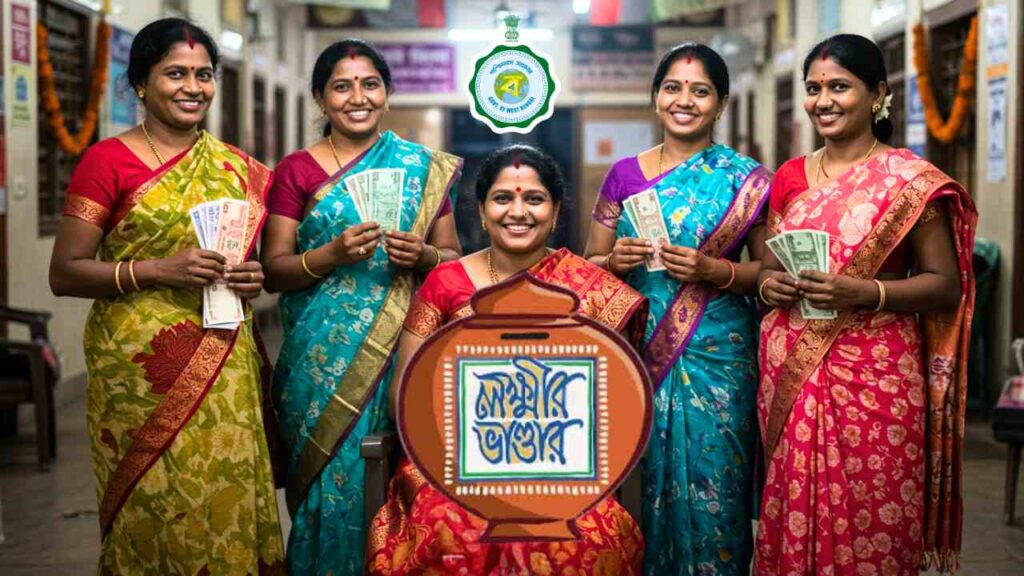
For Rehana Khatun, a 38-year-old domestic worker in Nadia, Lakshmir Bhandar decides whether cooking gas runs out before month-end. Her anxiety is electoral, not ideological:
“Vote hobe, naam thakle.”
(There will be a vote—if the name remains.)
BJP’s Counter-Offensive: Integrity, Identity, and the SIR Narrative
The Bharatiya Janata Party has positioned SIR as overdue reform. Its most aggressive voice in Bengal, Suvendu Adhikari, has described the revision as a clean-up of “fake voters, appeasement, and corruption.”
The BJP’s argument is blunt:
welfare without verification breeds misuse; electoral integrity must come first.
This message resonates in border districts and urban middle-class pockets, where concerns over migration, jobs, and governance run deep.
The Welfare Economy: How Benefits Become Infrastructure
In West Bengal, welfare operates as an economic ecosystem, not charity.
- The Distributors: Women-led SHGs managing last-mile delivery
- The Bankers: Banking correspondents handling DBT credits
- The Infrastructure: Local clinics and hospitals built around Swasthya Sathi
Disrupting this network risks daily instability. Preserving it builds political loyalty. This is why welfare functions as infrastructure rather than populism in Bengal.
The Economic Fault Line: Security vs Growth
Despite welfare’s reach, dissatisfaction simmers among the young and semi-urban electorate.
In Siliguri, 24-year-old delivery rider Raju (name changed) explains:
“Lakshmir Bhandar helps my mother. But I don’t want my sister depending on it forever.”
This aspirational voter—secure today but uncertain tomorrow—is the BJP’s primary target. The election’s underlying tension is no longer rich versus poor, but security versus growth.
The Binary Reality—with a Caveat
While the Communist Party of India (Marxist)–Indian National Congress alliance lacks statewide momentum, it cannot be dismissed outright.
In minority-dominated belts such as Malda and Murshidabad, the alliance remains a wild card—capable of splitting the anti-incumbency vote and subtly reshaping the TMC–BJP arithmetic.
The Final Choice Before Bengal
West Bengal’s election has narrowed into a stark decision:
- Protection: welfare continuity, voter inclusion, cultural familiarity
- Ambition: jobs, industrial revival, governance reset
The party that convinces voters it will not erase them—on paper or in policy—will control the outcome.
Conclusion: Bengal Is Voting With Its Nerves
The 2026 election will be remembered less for speeches and more for lists.
Who stayed on them.
Who disappeared from them.
And who felt protected when it mattered.
In today’s West Bengal, the strongest political promise is not development.
It is existence.