Transparency Reforms and Institutional Resistance: Why Openness Moves Slowly Block 23
Institutional resistance to transparency reforms in India’s election system

TruthWave Level-5 Public Investigation | Block 23 of 25 Transparency Reforms and Institutional Resistance SUMMARY Transparency is widely acknowledged as essential to electoral credibility. Yet reforms that increase openness inside election institutions often face resistance—not because transparency is rejected, but because it alters internal power dynamics and administrative comfort. Block 23 examines why transparency reforms … Read more
West Bengal Election 2026: The Voter List War

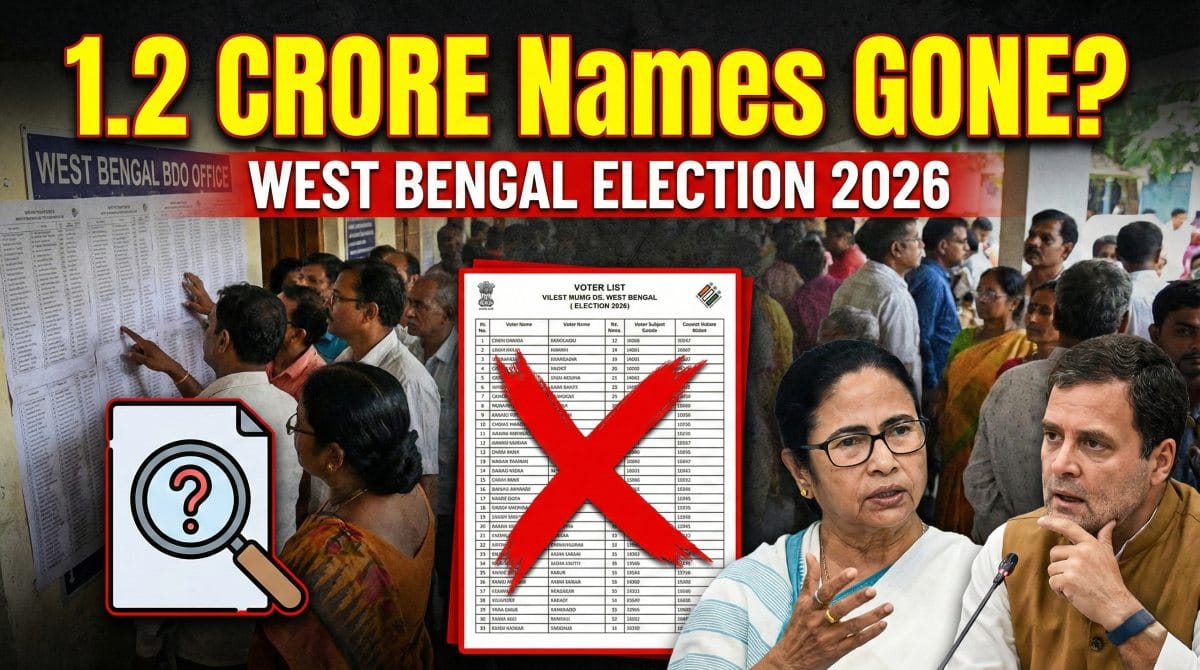
YouTube Thumbnail for West Bengal Election 2026. Text reads '1.2 CRORE Names GONE?' in yellow. Background shows anxious voters checking the electoral roll on a wall, overlaid with a red cross mark and a magnifying glass icon.

West Bengal Election 2026: The Voter List War and the Battle Beyond Ballots January 2026 has fundamentally altered Bengal’s election narrative.The political contest has moved away from stages and slogans into BDO offices, verification camps, and pasted electoral rolls. Following the Supreme Court’s January 19 intervention, the Special Intensive Revision (SIR) of voter lists has … Read more

Internal Checks and Their Limits: Why the Election Commission Polices Itself

Limits of internal accountability within India’s Election Commission

TruthWave Level-5 Public Investigation | Block 22 of 25 Internal Checks and Their Limits: Why the Election Commission Polices Itself SUMMARY The Election Commission of India (ECI) is constitutionally independent under Article 324, but its accountability mechanisms are largely internal. Unlike many regulators, the ECI does not face routine external oversight of its enforcement decisions … Read more

Why Electoral Reform Proposals Rarely Become Binding Law

Reasons electoral reform proposals fail to become binding law in India

TruthWave Level-5 Public Investigation | Block 21 of 25 Why Electoral Reform Proposals Rarely Become Binding Law SUMMARY India has produced no shortage of electoral reform proposals—from expert committees, courts, civil society, and within Parliament itself. Yet only a small fraction of these ideas become binding law. Block 21 examines the institutional, procedural, and political … Read more

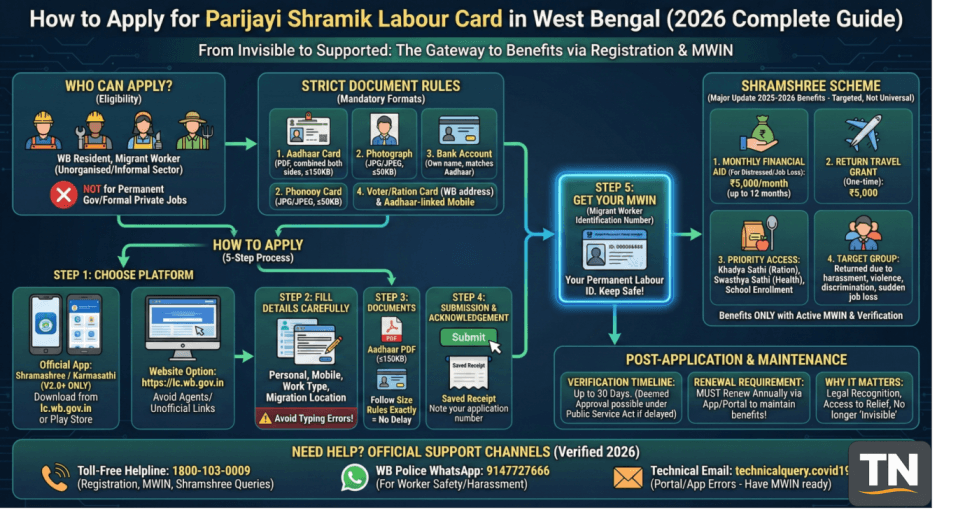
How to Apply for Parijayi Shramik Labour Card in West Bengal (2026 Complete Guide)

Parijayi Shramik Labour Card West Bengal registration 2026

Every year, lakhs of workers from West Bengal migrate to other states for work—construction sites, factories, hotels, farms, and private households. Most leave without written contracts, local identity documents, or any formal protection. When wages are withheld, jobs are lost, or harassment begins, migrant workers often face a harsh reality: they are invisible to the … Read more

Who Profits From Delay? Mapping the Beneficiaries of Electoral Inaction

Structural beneficiaries of delayed electoral reform in India

TruthWave Level-5 Public Investigation | Block 20 of 25 Who Profits From Delay? Mapping the Beneficiaries of Electoral Inaction SUMMARY Electoral reform delays are often explained as procedural complexity or political disagreement. But delay itself can produce beneficiaries. Block 20 examines how prolonged inaction in election reform creates structural advantages for certain actors—without requiring illegal … Read more

Technology, Transparency, and the Limits of Trust in India’s Election System

Limits of transparency in India’s election technology affecting public trust

TruthWave Level-5 Public Investigation | Block 19 of 25 Technology, Transparency, and the Limits of Trust in India’s Election System SUMMARY Election technology in India—especially EVMs, VVPATs, and digital processes—was introduced to enhance efficiency and integrity. However, technology alone cannot generate trust. Block 19 examines how transparency gaps, limited public understanding, and restricted auditability have … Read more

Aravalli Enforcement Vacuum

Rocky Aravalli ridge illustrating the enforcement vacuum affecting groundwater recharge and biodiversity during judicial abeyance

Aravalli Enforcement Vacuum During Judicial Abeyance I. Procedural Background On 29 December 2025, the Supreme Court of India, acting suo motu, placed its earlier directions issued in November 2025 concerning the application of the 100-metre hill definition in the Aravalli region in abeyance and constituted a High-Powered Expert Committee to reassess scientific and regulatory parameters. … Read more

Youth and First-Time Voters:

How institutional signals shape youth trust in Indian elections

TruthWave Level-5 Public Investigation | Block 18 of 25 How Institutional Signals Shape Democratic Engagement SUMMARY India’s youth and first-time voters represent the largest democratic cohort in the country’s history. Their engagement is shaped not only by campaigns or turnout drives, but by institutional signals—how rules are enforced, how disputes are resolved, and how transparently … Read more