

Skip to content
TruthWave india

TruthWave india

Truth Before Power

  • india
  • Public Services
  • Terms of Service
  • Privacy Policy
  • About TruthWave
  • Disclaimer
  • Toggle search form
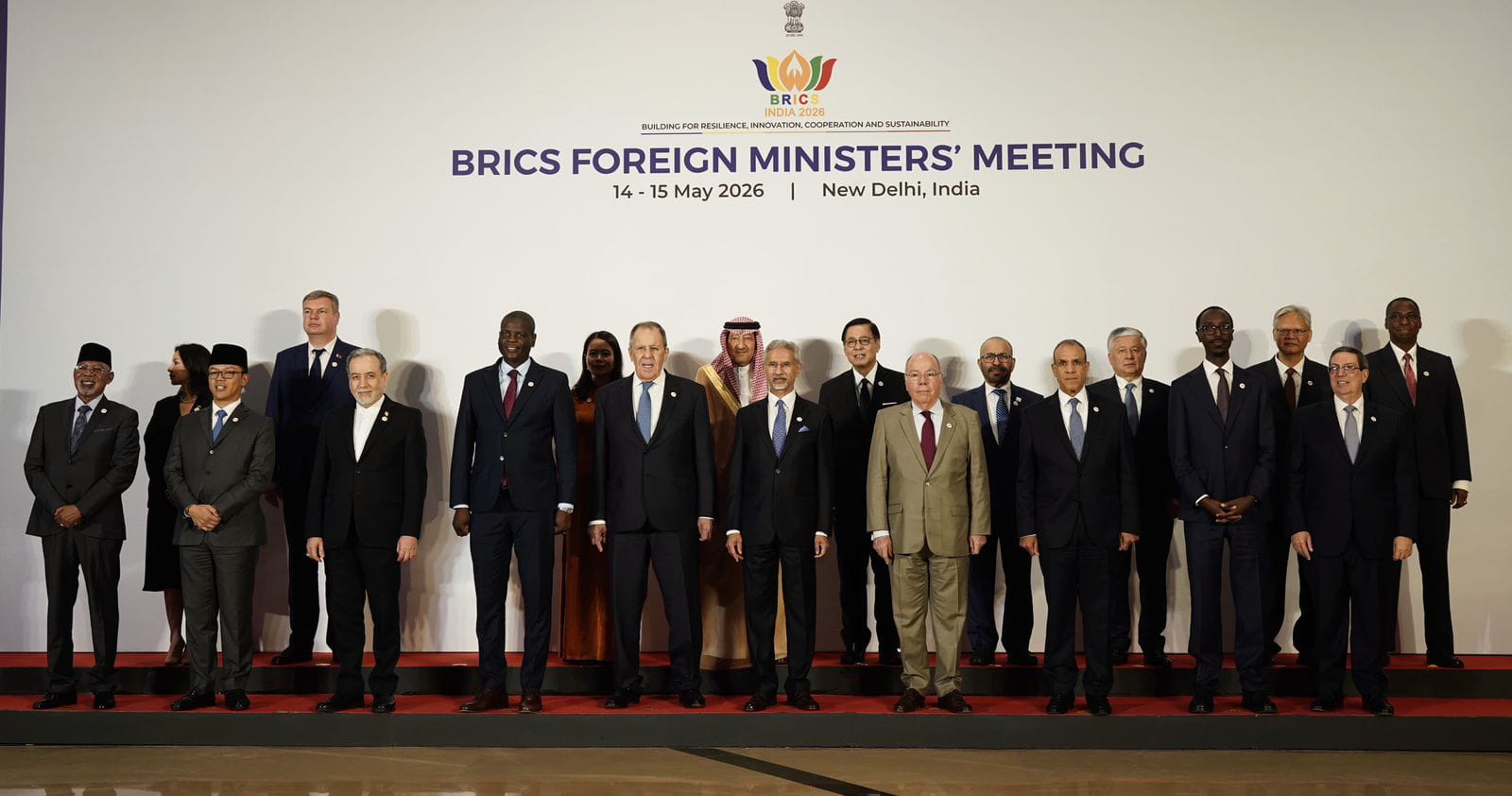
  • BRICS foreign ministers meeting in New Delhi in 2026
    BRICS Summit 2026: Members Agree on Joint Declaration Amid Middle East War International
  • Oil tanker representing global energy trade and oil imports
    India Warns New US Russian Oil Tariffs Could Strain Bilateral Ties

    India has warned that newly passed US legislation targeting countries that buy Russian oil could affect bilateral relations and the international energy market. The US House of Representatives passed legislation on September 17, 2026 that authorizes the US president to impose tariffs of up to 100% on countries including India and China in an effort...<p class="more-link-wrap"><a href="https://truthwave.in/india-warns-new-us-russian-oil-tariffs-could-strain-bilateral-ties/" class="more-link">Read More<span class="screen-reader-text"> “India Warns New US Russian Oil Tariffs Could Strain Bilateral Ties”</span> »</a></p>

  • পশ্চিমবঙ্গের কারিগরদের জন্য PM Vishwakarma প্রকল্পের প্রতিনিধিত্বকারী কারুশিল্প কর্মশালা
    পশ্চিমবঙ্গের কারিগরদের জন্য PM Vishwakarma 2026: আবেদন, যোগ্যতা ও সুবিধা Schemes
  • Yamuna Expressway Crash: Four Killed After Truck Lands on Car in Greater Noida india
  • NSE Co-Location Case 2026: What the Supreme Court Decision Means for SEBI, NSE and Investors india
  • সহানুভূতি স্কলারশিপ ২০২৬-২৭: আবেদন শুরু, শেষ তারিখ ৯ অক্টোবর Public Services
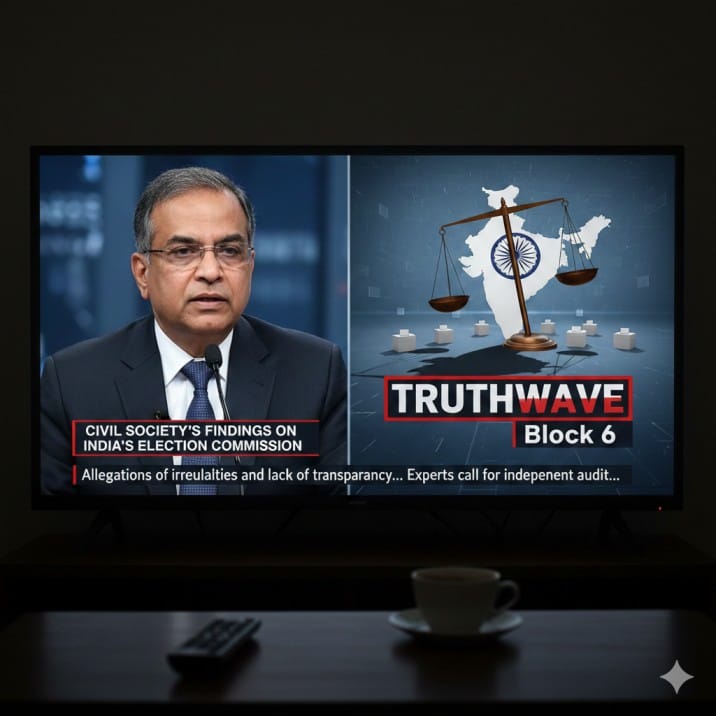
  • civil society election commission findings
    Civil Society’s Findings on India’s Election Commission | TruthWave Block 6 india
  • FCI Rice Allocation Case: How 62,000 Tonnes Became a ₹28.87 Crore Accountability Question investigation
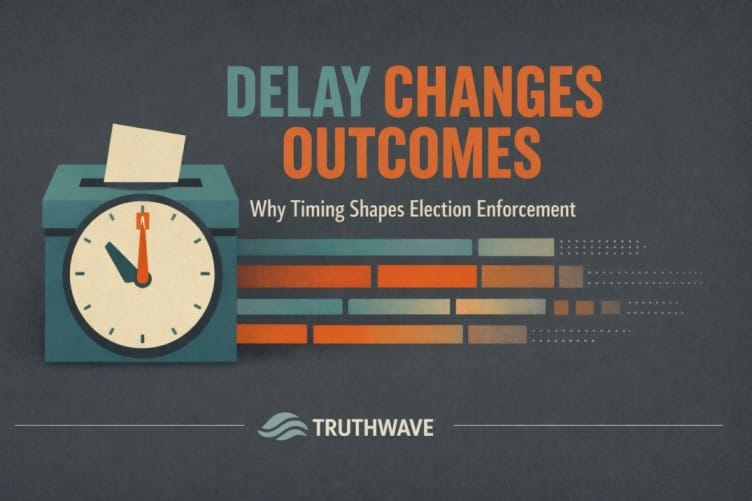
Election Commission enforcement delays affecting election outcomes

Timing, Delays, and Selective Action: How Enforcement Outcomes Are Shaped

Posted on 12/27/202512/17/2025 By idmahamad sekh 2 Comments on Timing, Delays, and Selective Action: How Enforcement Outcomes Are Shaped

TruthWave Level-5 Public Investigation | Block 15 of 25


SUMMARY

Election enforcement is not determined only by rules, but by when and how those rules are applied. In India, delays in decision-making, selective timing of action, and procedural caution have often shaped the impact of Election Commission interventions. Block 15 examines how timing itself became a powerful variable in election enforcement outcomes.


INTRODUCTION — WHY TIMING MATTERS IN DEMOCRACY

In elections, enforcement delayed is enforcement diluted.

Even when rules exist and authority is clear, late action can change outcomes as effectively as no action at all. In India’s election system, the Election Commission of India (ECI) frequently faces structural and administrative constraints that affect not just what decisions are taken, but when they are taken.

This block investigates how timing, delay, and selective enforcement influence electoral outcomes without altering formal legality.


THE NATURE OF TIME-SENSITIVE ENFORCEMENT

Election periods are compressed and irreversible:

  • Campaign windows are short
  • Polling dates are fixed
  • Voter perception forms rapidly

Decisions taken:

  • After campaigning ends
  • After polling concludes
  • After results are declared

May be legally correct but politically inconsequential.


STRUCTURAL CAUSES OF DELAY

1. Administrative Reliance

As examined in Block 14, the ECI relies on:

  • District administration
  • Police machinery
  • State authorities

Each layer introduces procedural time lags.


2. Legal Caution

The Commission often:

  • Seeks legal vetting
  • Avoids actions vulnerable to court challenge
  • Prefers advisory routes over punitive ones

This caution protects legality but slows enforcement.


3. Absence of Statutory Timelines

Most ECI actions:

  • Have no legally mandated deadlines
  • Depend on internal discretion

Delay carries no institutional penalty.


SELECTIVE TIMING VS SELECTIVE INTENT

Selective enforcement is often alleged as political bias.

However, structural analysis shows a different pattern:

  • Similar violations receive different outcomes depending on timing
  • Early violations attract stronger response
  • Late violations face procedural limits

This produces uneven enforcement effects, even without deliberate intent.


MODEL CODE OF CONDUCT AND TEMPORAL LIMITS

The Model Code of Conduct:

  • Operates only during election periods
  • Loses enforceability once polling concludes

Violations identified late:

  • Cannot be penalised meaningfully
  • Are often closed with observations

Timing, not authority, becomes decisive.


JUDICIAL OBSERVATIONS ON DELAY

Courts have acknowledged that:

  • Election-related remedies must be timely
  • Post-facto corrections have limited value

Judicial restraint also limits interference once elections conclude.

Source:
Supreme Court of India
https://main.sci.gov.in


PEOPLE’S IMPACT

A first-time voter in Rajasthan described the effect:

“Complaints come, inquiries happen, but decisions arrive after voting. By then, it doesn’t matter to us.”

This reflects process fatigue, not disengagement.


THE STRUCTURAL CONSEQUENCE

Timing-related constraints lead to:

  • Reduced deterrence
  • Perception of inconsistency
  • Public confusion over accountability

Legality survives. Credibility strains.


WHAT THIS DOES NOT CLAIM

This investigation does not claim deliberate favouritism or partisan intent.
It examines how structural delays alter enforcement impact, regardless of motive.


WHY THIS MATTERS

In democracy, fairness depends not just on rules, but on timely application. When enforcement lags behind events, public trust erodes even if procedures are followed correctly.


TRUTHWAVE FINDING

India’s election enforcement is shaped as much by time constraints as by authority.

Delay has become an invisible variable influencing outcomes.


For background on administrative dependence affecting enforcement speed, see TruthWave Block 14: Administrative Dependence and Enforcement Limits.


LEGAL-SAFETY NOTE

This investigation examines institutional systems and publicly available data. It does not allege individual wrongdoing.


Continue to Block 16:
How voter trust eroded despite regular, large-scale elections.
Public Services Tags:Election Commission of India, Electoral fairness, Enforcement delays, Indian democracy, Model Code of Conduct, TruthWave investigation

Post navigation

Previous Post: Administrative Dependence: Why the Election Commission Lacks Enforcement Power
Next Post: Voter Trust Erosion: Why Confidence Declined Despite Regular Elections bLOCK 16

Related Posts

  • Declining voter trust in Indian elections despite regular voting
    Voter Trust Erosion: Why Confidence Declined Despite Regular Elections bLOCK 16 Public Services
  • Regional rural bank building illustrating IBPS RRB recruitment 2026
    IBPS RRB Recruitment 2026: Revised Vacancies Released, Check Posts and Official Update india
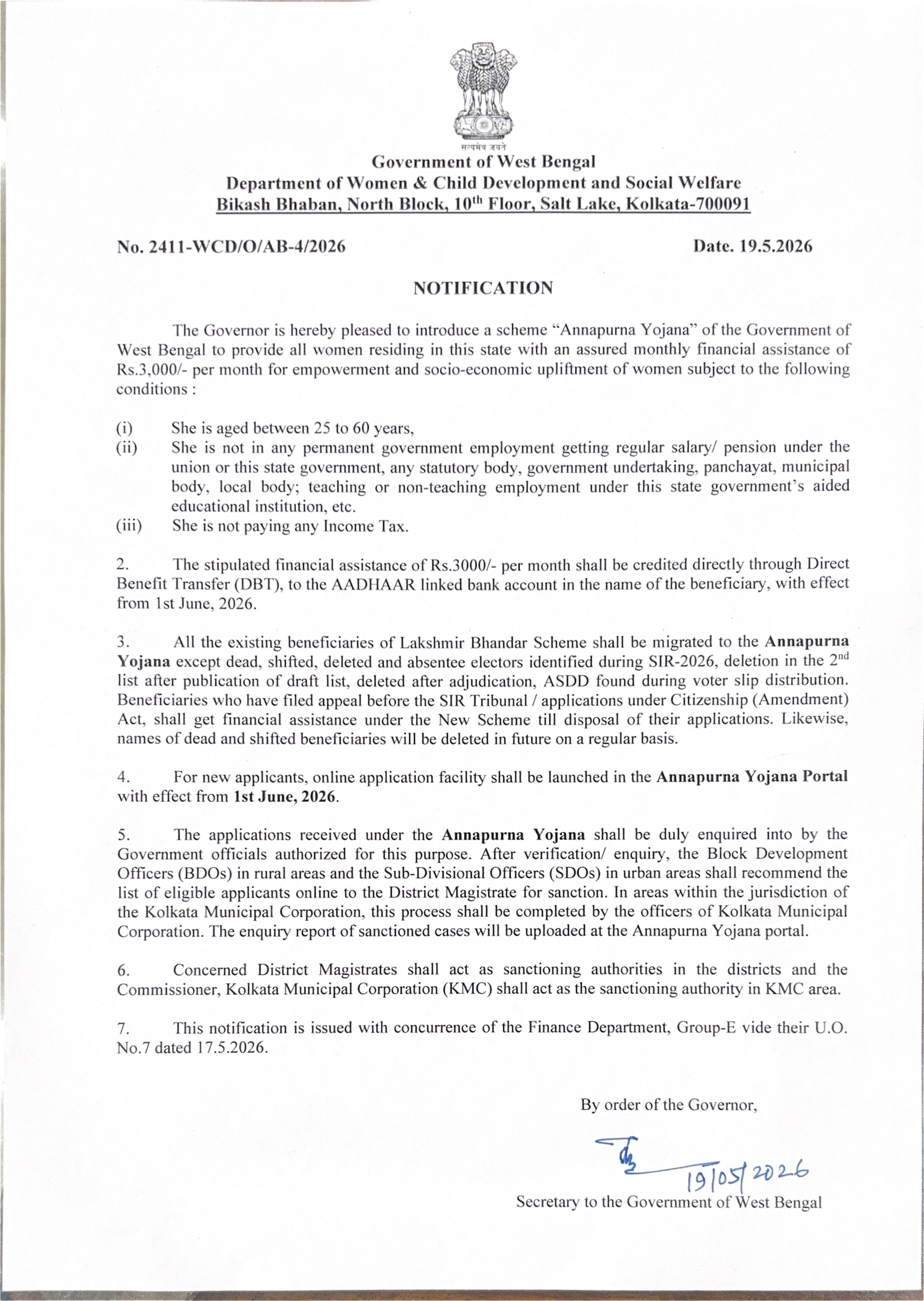
  • West Bengal Government Annapurna Yojana 2026 official notification
    অন্নপূর্ণা যোজনা ২০২৬: সেপ্টেম্বরের ₹৩,০০০ টাকা না এলে স্ট্যাটাস ও DBT কীভাবে যাচাই করবেন Public Services
  • West Bengal Police constable recruitment 2024 representative police officer image
    পশ্চিমবঙ্গ পুলিশ কনস্টেবল নিয়োগ ২০২৪: ১০ সেপ্টেম্বরের নতুন নোটিসে প্রার্থীদের কী জানা দরকার Public Services
  • Student preparing documents for OASIS Scholarship 2026-27 application
    OASIS Scholarship 2026-27: পশ্চিমবঙ্গে SC, ST ও OBC ছাত্রদের অনলাইন আবেদন চলছে, কীভাবে আবেদন করবেন Public Services
  • পুরুলিয়ায় করম পরবের উৎসবের দৃশ্য
    ২২ সেপ্টেম্বর ২০২৬ পশ্চিমবঙ্গে স্কুল ছুটি: করম পুজোর সরকারি নির্দেশ ও ছাত্রছাত্রীদের করণীয় Public Services

Comments (2) on “Timing, Delays, and Selective Action: How Enforcement Outcomes Are Shaped”

  1. Anonymous says:
    12/29/2025 at 08:59

    Good morning

  2. Pingback: Voter Trust Erosion: Why Confidence Declined Despite Regular Elections - TRUTHWAVE India Voter Trust in Indian Elections | TruthWave Block 16

Comments are closed.

  • Nepal Army helicopter rescue over the flooded Bhote Koshi River, representative image
    Nepal Flood Disaster: Death Toll Hits 903 as 4,247 Remain Missing Science & Technology
  • India Post GDS Recruitment 2026: 23,757 Jobs, Eligibility, Dates and How to Apply india
  • NH-327 Bagdogra–Galgalia Tender 2026: ₹863.30 কোটি প্রকল্পে আবেদন শেষ ২ নভেম্বর Jobs
  • Heavy rain and traffic on a Kolkata street, representative image for West Bengal weather alert
    কলকাতা মেট্রো ১৩ সেপ্টেম্বর ২০২৬: ব্লু লাইনের কোন অংশ বন্ধ, যাত্রীদের সময়সূচি Public Services
  • Senior citizen in India representing West Bengal pension beneficiaries
    পশ্চিমবঙ্গ পেনশন ১৫০০ টাকা: কারা পাবেন ও টাকা কবে ঢুকবে Public Services
  • LPG Price September 1, 2026: New Commercial Gas Rates in Delhi, Mumbai, Kolkata and Chennai india
  • Maharashtra Loose Edible Oil Pause: What the One-Year Reprieve Means for Consumer Safety india
  • Limits of internal accountability within India’s Election Commission
    Internal Checks and Their Limits: Why the Election Commission Polices Itself Public Services

Copyright © 2026 TruthWave india .

Powered by PressBook News WordPress theme