


Skip to content
TruthWave india

TruthWave india

Truth Before Power

  • india
  • Public Services
  • Terms of Service
  • Privacy Policy
  • About TruthWave
  • Disclaimer
  • Toggle search form
  • Jeffrey Epstein case two-tiered justice system comparison showing a golden gavel in a luxury hotel suite versus a rusted gavel in a prison cell.
    The Epstein Files 2026: A Definitive Analysis of the ‘Sweetheart Deal’ and America’s Two-Tiered Justice System investigation
  • Rain falling on streets of Kolkata, West Bengal
    পশ্চিমবঙ্গ আবহাওয়া ১৩ সেপ্টেম্বর ২০২৬: ৫ জেলায় কমলা সতর্কতা, কোথায় ভারী বৃষ্টি Public Services
  • India urban water crisis explained through structural failure
    Why India’s Urban Water Crisis Is Structural, Not Seasonal — Explained Public Services
  • Student preparing documents for OASIS Scholarship 2026-27 application
    OASIS Scholarship 2026-27: পশ্চিমবঙ্গে SC, ST ও OBC ছাত্রদের অনলাইন আবেদন চলছে, কীভাবে আবেদন করবেন Public Services
  • Students in a classroom at a college in Howrah, West Bengal, India
    পশ্চিমবঙ্গে নতুন Swami Vivekananda Merit Scholarship 2026: কারা পাবেন, কী সুবিধা, আবেদন কবে Public Services
  • Future choices facing India’s Election Commission after delayed reforms
    The Future of India’s Election Commission: Public Services
  • Limits of internal accountability within India’s Election Commission
    Internal Checks and Their Limits: Why the Election Commission Polices Itself Public Services
  • Indian police Sub-Inspector in uniform, representative image for SSC CPO 2026 recruitment
    SSC CPO Recruitment 2026: 1,871 SI पदों के लिए आवेदन शुरू, 30 सितंबर अंतिम तारीख Jobs
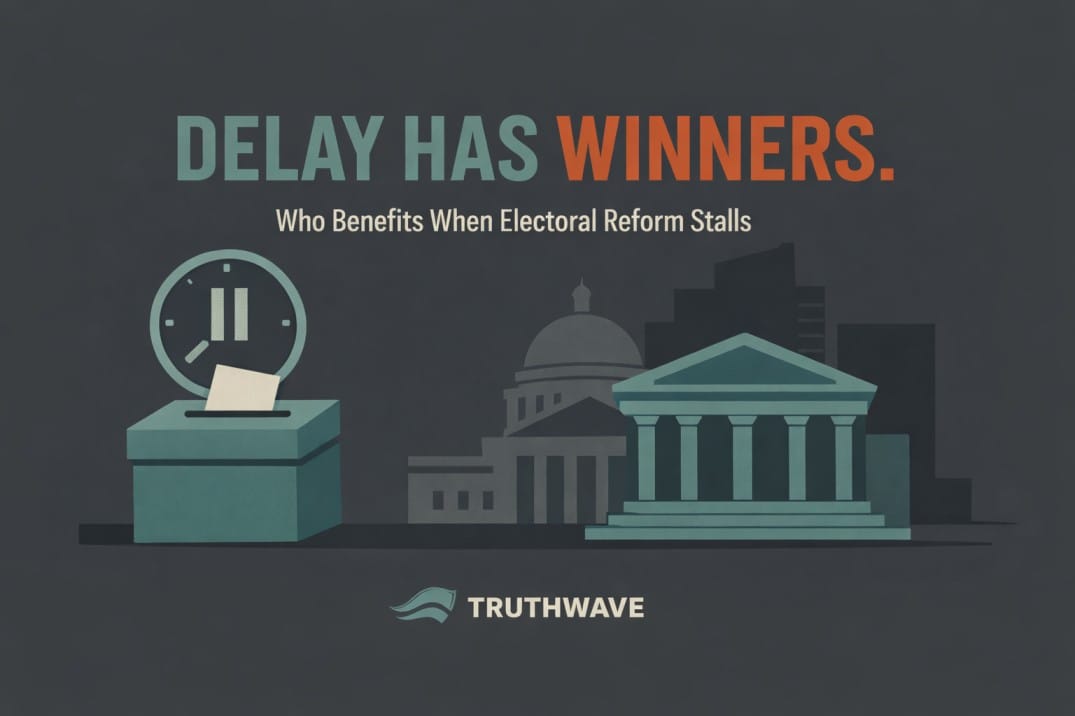
Structural beneficiaries of delayed electoral reform in India

Who Profits From Delay? Mapping the Beneficiaries of Electoral Inaction

Posted on 01/14/202601/08/2026 By idmahamad sekh 1 Comment on Who Profits From Delay? Mapping the Beneficiaries of Electoral Inaction

TruthWave Level-5 Public Investigation | Block 20 of 25


Who Profits From Delay? Mapping the Beneficiaries of Electoral Inaction

SUMMARY

Electoral reform delays are often explained as procedural complexity or political disagreement. But delay itself can produce beneficiaries. Block 20 examines how prolonged inaction in election reform creates structural advantages for certain actors—without requiring illegal conduct or explicit coordination.


INTRODUCTION — DELAY IS NOT NEUTRAL

In democratic systems, delay is often framed as caution.

However, when reform is postponed repeatedly, existing power arrangements remain intact. Over time, this stability benefits those best adapted to the current system. This block investigates who gains from delayed electoral reform—and how those gains operate structurally rather than personally.


THE STRUCTURAL EFFECT OF INACTION

When reform stalls:

  • Existing rules continue to govern
  • Institutional gaps remain unresolved
  • Enforcement limitations persist

This favors actors who:

  • Understand loopholes
  • Have resources to navigate complexity
  • Can absorb compliance uncertainty

Delay becomes an advantage—not an accident.


BENEFICIARY CATEGORY 1: ESTABLISHED POLITICAL ORGANISATIONS

Large, well-resourced political organisations benefit from:

  • Familiarity with existing election laws
  • Organisational memory of enforcement patterns
  • Ability to deploy compliance teams quickly

Smaller or newer entrants face higher relative costs.

This advantage is structural, not partisan.


BENEFICIARY CATEGORY 2: CAMPAIGN SERVICE ECOSYSTEM

Prolonged regulatory ambiguity sustains demand for:

  • Legal advisory services
  • Compliance consultants
  • Political advertising intermediaries

Unclear or delayed reforms increase reliance on specialised expertise.


BENEFICIARY CATEGORY 3: DIGITAL INTERMEDIARIES

In the absence of updated regulation:

  • Digital platforms operate under evolving guidelines
  • Political messaging spreads faster than oversight

Delayed statutory clarity allows platforms to:

  • Adapt policies internally
  • Avoid uniform external standards

BENEFICIARY CATEGORY 4: INCUMBENT ADMINISTRATIVE STRUCTURES

Administrative systems adapt to existing workflows.

Major reform would require:

  • New enforcement units
  • Expanded audits
  • Increased accountability

Delay avoids institutional disruption.


WHO DOES NOT BENEFIT

Electoral inaction does not benefit:

  • First-time candidates
  • Smaller parties
  • Independent voters
  • Citizens seeking clarity and accountability

Uncertainty increases participation costs for those without institutional buffers.


PEOPLE’S IMPACT

A local-level political volunteer in Odisha described the imbalance:

“Those who know the system manage it. Newcomers struggle to even understand the rules.”

This reflects access disparity, not manipulation.


WHAT THIS DOES NOT CLAIM

This investigation does not allege corruption, collusion, or illegality.
It examines how structural delay redistributes advantage, even within lawful systems.


WHY THIS MATTERS

Democratic fairness depends not just on legality, but on equal navigability of rules. When delay becomes permanent, advantage concentrates—quietly.


TRUTHWAVE FINDING

Electoral reform delays do not preserve neutrality.
They freeze advantage in favor of those already embedded in the system.

Delay becomes a silent policy choice.


For background on how legislative postponement shaped enforcement gaps, see TruthWave Block 14: Legislative Inaction and Electoral Reform Delays.


LEGAL-SAFETY NOTE

This investigation examines institutional systems and publicly available data. It does not allege individual wrongdoing.


Continue to Block 21:
Why reform proposals fail to translate into binding law.
Public Services Tags:democratic fairness, electoral reform delay, governance reform, Indian democracy, political institutions, TruthWave investigation

Post navigation

Previous Post: Technology, Transparency, and the Limits of Trust in India’s Election System
Next Post: How to Apply for Parijayi Shramik Labour Card in West Bengal (2026 Complete Guide)

Related Posts

  • Aravalli Hills showing forested ridges, mining damage, and dried water bodies highlighting groundwater and climate risk in North India
    Aravalli hill The 100-Metre Blind Spot: How a Provisional Definition Puts North India’s Water at Risk Public Services
  • Sinopec fuel station in China, representative image for fuel price policy and energy costs
    China Fuel Prices Rise From September 12: Government Caps Increase as Oil Costs Surge Public Services
  • ইন্ডিয়াস্কিলস ২০২৬-২৭ দক্ষতা প্রতিযোগিতায় অংশগ্রহণের প্রস্তুতি নিচ্ছেন তরুণ দক্ষ কর্মী
    ইন্ডিয়াস্কিলস ২০২৬-২৭: ১৫ সেপ্টেম্বর শেষ আবেদন india
  • Delhi city streets in India
    Delhi Rain Brings Relief as City Records Second-Best AQI of 2026 india
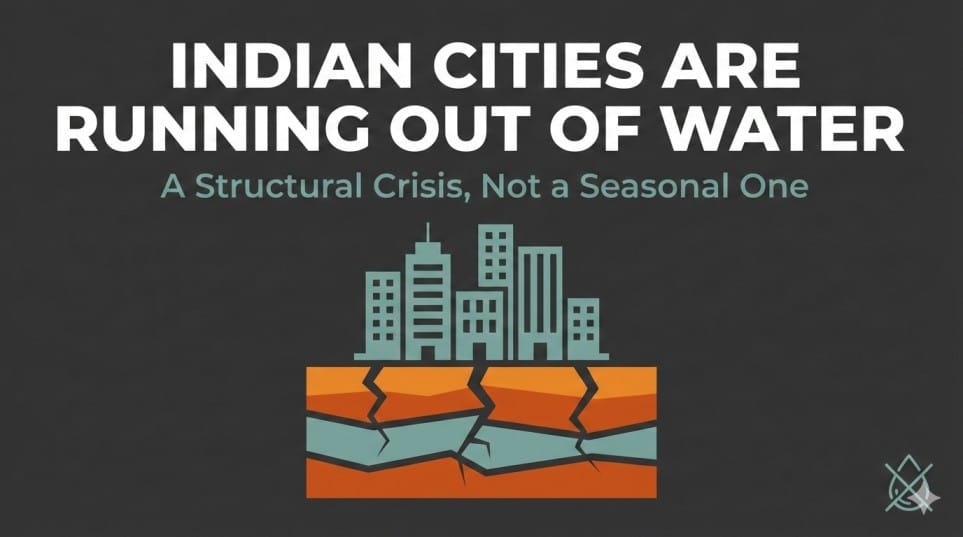
  • India urban water crisis explained through structural failure
    Why India’s Urban Water Crisis Is Structural, Not Seasonal — Explained Public Services
  • why indian cities are running out of water
    Why Indian Cities Are Running Out of Water Explained for India and the World Public Services

Comment (1) on “Who Profits From Delay? Mapping the Beneficiaries of Electoral Inaction”

  1. Pingback: Why Electoral Reform Proposals Rarely Become Binding Law - TRUTHWAVE India Why Electoral Reform Proposals Stall | TruthWave Block 21

Comments are closed.

  • Senior citizen in India representing West Bengal pension beneficiaries
    পশ্চিমবঙ্গ পেনশন ১৫০০ টাকা: কারা পাবেন ও টাকা কবে ঢুকবে Public Services
  • Indian police Sub-Inspector in uniform, representative image for SSC CPO 2026 recruitment
    SSC CPO Recruitment 2026: 1,871 SI पदों के लिए आवेदन शुरू, 30 सितंबर अंतिम तारीख Jobs
  • Indian freight train representing the Western Dedicated Freight Corridor and India's logistics infrastructure
    India’s Freight Network Gets a Major Boost as 326 km of Western Dedicated Freight Corridor Opens india
  • INVESTIGATION: Jhiram Ghati Verdict 2026: What the Conviction of 10 Accused Establishes india
  • Legislative delay in electoral reform impacting India’s election system
    Legislative Inaction: How Electoral Reform Was Delayed for Two Decades india
  • WBPSC Miscellaneous Services examination admit card preparation
    WBPSC Miscellaneous Admit Card 2026: 22 সেপ্টেম্বর থেকে ডাউনলোড, পরীক্ষার তারিখ 4 অক্টোবর Jobs
  • Indian classroom used as an illustrative image for the West Bengal in-service teachers TET update
    পশ্চিমবঙ্গে ৯০ হাজার ইন-সার্ভিস শিক্ষকের TET: ১১ সেপ্টেম্বরের নির্দেশে কী জানা গেল Public Services
  • INVESTIGATION: Malda Newborn Deaths Rose to 89 in August. What the Referral Chain Must Establish india

Copyright © 2026 TruthWave india .

Powered by PressBook News WordPress theme